Curtis Gamble
The Short and Tragic Life of Robert PeaceCurtis Gamble is the amiable leader and emotional center of the Burger Boyz, the group of St. Benedict’s students whose friendship gives Rob Peace a substitute family and a durable sense of belonging. Curtis’s home at 34 Smith Street becomes their refuge, classroom, clubhouse, and finally the scene of Rob’s murder. Through Curtis, the story shows both the sustaining power of chosen family and the terrible limits of friendship when violence, grief, and legal danger converge.
Identity and Background
Curtis enters Rob’s life at St. Benedict’s as curious, easygoing, and hilarious—the boy who seemed to know how to spend every hour well. His mother was white and his father black, and both were schoolteachers. The family lived on Smith Street in East Orange, roughly a mile southeast of Rob’s home, in circumstances comfortable enough to make Curtis appear to his friends as a model of stability. His relaxed approach to life and relative security made him someone the others wanted to resemble and, in the future, someone they imagined raising their own children to be like.
The boys initially knew very little about one another’s histories. They discussed music, food, parties, practice, teachers, and coaches rather than the private troubles each carried. Their bond developed through this ordinary teenage talk as much as through their shared status as members of what they believed might be the only all-minority water polo team in the country, perhaps in the world. Curtis’s importance therefore emerges not from a single confession or dramatic declaration but from the daily space he helped make possible: a place where young men from difficult circumstances could be boys together before they were required to explain themselves.
The Smith Street Refuge
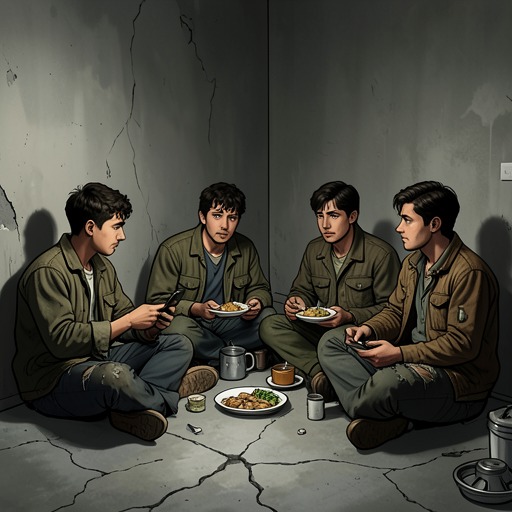
Curtis’s mother regularly collected the boys downtown and brought them home to 34 Smith Street. She fed them despite the expense of nourishing five high school boys who swam for miles and often received little food at home. The basement beside the laundry area was cramped, crowded by metal shelves and boxes of old clothes, but it had a refrigerator full of soda. The boys converted the space into a clubhouse, wedging themselves among the storage and studying with books on their laps.
Rob became the academic engine of this household-within-a-household. For hours he explained what his friends needed to know in each class, including subjects he was not taking himself. Curtis’s father usually remained upstairs watching the news or preparing lesson plans for the next day. His presence mattered as much as his advice. When he spoke about the boys’ future, he treated college as an expected destination rather than a distant possibility. For Rob and Julius “Flowy” Starkes, that steady paternal presence was astonishing and perhaps enviable; for Tavarus Hester, it suggested a kinder version of the present than the one he had been given.
The basement became the physical center of the boys’ lives. All of them except Drew Jemison could walk there, and any member of the group might be found inside when he was not at school, sometimes when he should have been. They were warm, fed, and removed from the conflicts outside. On that foundation, Curtis’s home supplied what many of them lacked: a family structure that felt immediate, dependable, and good. Curtis did not merely host the Burger Boyz; through his family, he made their brotherhood materially real.
Friendship, School, and Loyalty
Curtis’s leadership combined sociability with practical care. He was the person who made the group feel at ease, but he also acted when circumstances demanded it. During the confrontation between St. Benedict’s and Central High School, Curtis pulled Rob and the rest of the water polo team out of the pool during warm-ups to tell them that a fight had begun. The boys watched the melee from above as students from Central, with greater numbers, overwhelmed their classmates. Rob wanted to descend into the fight, anger tightening his body as he saw his schoolmates being beaten. Curtis seized him by both shoulders from behind and prevented him from joining the violence.
Curtis’s intervention did not erase the tensions that produced the fight. At St. Benedict’s, in a world where money and possessions were limited, words carried dignity, pride, and self-worth; insults could become fists, and students and teachers were drawn into the disorder. Curtis nevertheless functioned as a brake on Rob’s most immediate impulses. His friendship offered Rob a form of protection that was physical in that moment and more broadly moral: an insistence that loyalty to the group did not require every available act of retaliation.
The group later confronted another institutional crisis when Friar Edwin Leahy’s departure threatened the school they depended on. Rob, Curtis, Julius “Flowy” Starkes, and Tavarus Hester met with Friar Leahy and begged him to remain. Speaking for the group, Rob promised that if the headmaster left, they would leave as well. Curtis’s presence in that appeal reveals how closely the friends connected their futures to the adults and institutions that had given them direction. Their loyalty was not passive attachment; it became a collective demand that the school remain recognizable as the place where their lives had begun to change.
The Burger Boyz—Rob, Curtis, Tavarus, Drew, and Flowy—took their name from the Burger King around the corner, where they could often be found between class and practice. Curtis’s home and the restaurant formed complementary parts of their social world: one supplied food, study, and shelter, while the other supplied a public meeting place. Their athletic discipline was equally communal. They won their first tournament at Lawrenceville, finished second at Wesleyan University, and came within two wins of the Mid-Atlantic championship. During tournament trips, the boys drank, smoked, listened to music, and played spades late into the night, then played with full intensity the following day. During the week they practiced until after six, watched game film at Coach Ridley’s house until eight, studied at Curtis’s until ten, and relied on Curtis’s mother to return them home.
Loss and the Burden of Continuity
Curtis’s father died from cancer during the summer between Curtis’s junior and senior years. The death echoed the earlier loss of Tavarus Hester’s father and the absences already surrounding Julius “Flowy” Starkes, Drew Jemison, and Rob. The boys had once avoided discussing their hardest experiences, but grief broke through that agreement. Together and separately, they wondered what grievance God held against the fathers and sons of East Orange.
For the group, Curtis’s father had been more than a parent in the background. Although sometimes gruff, he was a beacon: a man who returned home by six, helped with homework, and delivered a verbal reprimand when one of the boys deserved it. He embodied the eyes-on-the-prize mentality that the boys were trying to preserve amid streets where thugs, drug users, and vagrants moved at night. His death removed a source of authority and ordinary care from the place that had held the group together.
Curtis’s loss also intensified the meaning of friendship. Losing a father was not presented as a single wound that achievement could cancel. It became a lifelong condition, made sharper by the knowledge that no later success could restore the absent person. Friendship did not overcome the loss, but it gave the boys a way to endure it. Curtis, who had once offered the group a home through his parents, now had to inhabit that home without his father while the same friends gathered around him.
The friends’ lives then diverged. In the summer of 1998, Curtis was preparing to attend Morehouse, while Victor Raymond was headed to Daniel Webster College, Tavarus to the University of Georgia–Clarkson, and Drew to Johnson C. Smith. Flowy’s hopes of a scholarship and college had collapsed, and he did not apply. Their final summer together included nostalgic lunches at the Burger King near St. Benedict’s, backyard barbecues, and the tattoo Rob received from an image Victor Raymond had drawn. The rituals expressed continuity even as college, money, and unequal opportunity began pulling the group apart.
Curtis and Rob in Adulthood
By adulthood, Curtis was described as the king of campus at Morehouse, while Tavarus and Drew struggled academically and, in Tavarus’s case, financially. Rob remained in contact with the group and took an interest in Tavarus’s plans to flip houses. Curtis’s relative success did not make him separate from his friends; the old network continued to organize their lives, even as each man occupied a different economic and geographic position. Curtis’s home remained part of that network, a place where plans could be discussed and obligations redistributed.
Curtis also accompanied Rob during Rob’s 2003 trip to Rio de Janeiro. He flew down from Atlanta after hearing the serenity in Rob’s voice during an international call. Together they climbed Corcovado to the Cristo Redentor statue, whose image of peace stood above the city. Curtis did not join Rob on a proposed visit to the Rocinha favela, choosing instead to spend his remaining day on the beach. When Rob returned with Kaliana and an unusually large quantity of marijuana, Curtis wondered whether Rob was dealing in Rio, in a culture and legal system he did not fully understand. His concern was characteristic: he could share Rob’s adventures while still recognizing the danger beneath them.
Curtis’s relationship with Rob also included a capacity to perceive anger that other people might miss. Arthur Turpin, an affluent Yale student who spent Thursday nights playing pool and joking with Rob, noticed Rob’s resentment toward privilege and his disdain for Yale. Curtis belonged to a different history with Rob, formed before Yale and rooted in shared deprivation, athletic effort, and family-like dependence. That difference mattered. Curtis did not simply observe Rob’s anger from outside; he understood the social world from which it arose and the loyalties that kept drawing Rob back toward people who needed him.
Rob’s Death and Curtis’s Aftermath
Rob eventually resumed marijuana dealing after an approximately year-and-a-half hiatus, while working to renovate and maintain his house. Curtis and Tavarus were present as Rob’s plans took shape, and Curtis’s house became connected to the increasingly dangerous business around him. On the night of May 18, 2011, Rob was shot twice and killed in the basement of 34 Smith Street. The location transformed the refuge of their adolescence into the site of irreversible loss.
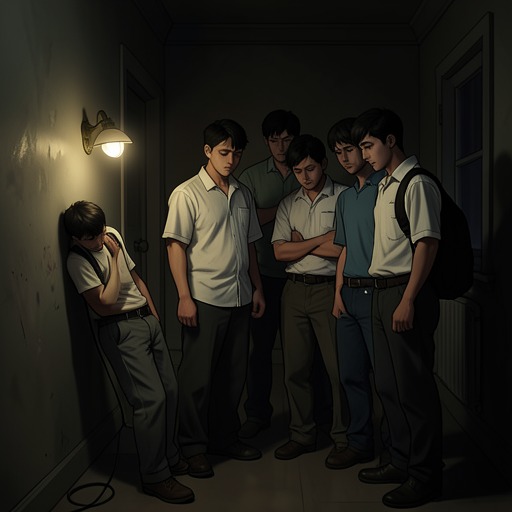
After the shooting, Tavarus scrubbed Rob’s blood from the textured basement floor with a sponge and bucket. On the day of Rob’s funeral, the friends held a small ceremony in the backyard only a few yards from where he had died. Police continued to enter and leave the property, Curtis had been released after three nights in a cell, and charges against him were expected in connection with the events and the drug commerce conducted in the basement. Yet the house remained their place of mourning. They ate, slept, shared a mournful blunt, and raised a toast while struggling to process the vacancy left by Rob’s broad shoulders and voice.
Curtis could not participate easily in that ceremony. He abstained from alcohol and drugs in case police returned, and he remained psychologically fixed on the moment four nights earlier when he had held and cradled Rob’s lifeless body. The event became a point from which he could not move. Tavarus, Darlene, and Christopher believed that Rob had saved their lives as well as his own by confronting the danger in the house; that belief offered a narrow form of meaning, but it could not release Curtis from the physical memory of holding his friend.
Grief soon became entangled with revenge. Curtis used Facebook in an unsuccessful attempt to hire private mercenaries to find Rob’s killers and retaliate. His vendetta consumed him while his own legal problems continued through hearings linking him to the commerce in the basement. Tavarus, himself incapacitated enough to close his restaurant and take a telemarketing job, persuaded Curtis to stop. Violence could not solve violence, and Rob’s death could not be reversed by creating another death.
The group’s later efforts to reconnect with Jackie Peace also failed. Raquel raised $5,000 through Facebook to help pay Jackie’s funeral costs, while many former classmates declined to contribute because of the circumstances of Rob’s death. Curtis and the others tried calling Jackie, but relatives answering her phone rebuffed them. Their separation from the woman they had all called “Ma” became another consequence of the murder, one that remained unresolved alongside the failure to bring the killers to justice. Flowy’s tattoo—“Real Peace Never Die BB4Life.”—preserved the group’s claim that Rob’s life and their brotherhood endured, but Curtis’s story shows how endurance can coexist with permanent psychological arrest.
Narrative Role and Significance
Curtis is a round, relationally defined character whose significance lies in what he makes possible for others. His humor and sociability first establish him as the group’s easygoing leader, but his deeper function is infrastructural: his mother feeds the boys, his father directs them toward college, and his basement gives them a stable place to study, argue, relax, and become a family. The story’s most painful irony is that the same house that sheltered Rob becomes the setting of Rob’s death.
Curtis also embodies the book’s tension between chosen family and inherited circumstance. He offers Rob warmth without being able to abolish the poverty, father absence, racial conflict, drug economy, and violence that surround them. He restrains Rob during the St. Benedict’s–Central High conflict, accompanies him to Rio, worries when Rob appears to be dealing abroad, and later stands at the center of the legal and emotional aftermath of the basement shooting. His loyalty is therefore both protective and vulnerable: it can interrupt violence for a moment, but it cannot guarantee that violence will not return through the very relationships and spaces the friends have built.
In the end, Curtis remains the keeper of the place where the Burger Boyz became brothers and where that brotherhood was shattered. His mourning, his attempted revenge, his restraint, and his estrangement from Jackie make him a measure of the costs that survive Rob’s death. Curtis does not resolve the story’s violence; he carries its unfinished consequences.